 Opera Houses in Rome
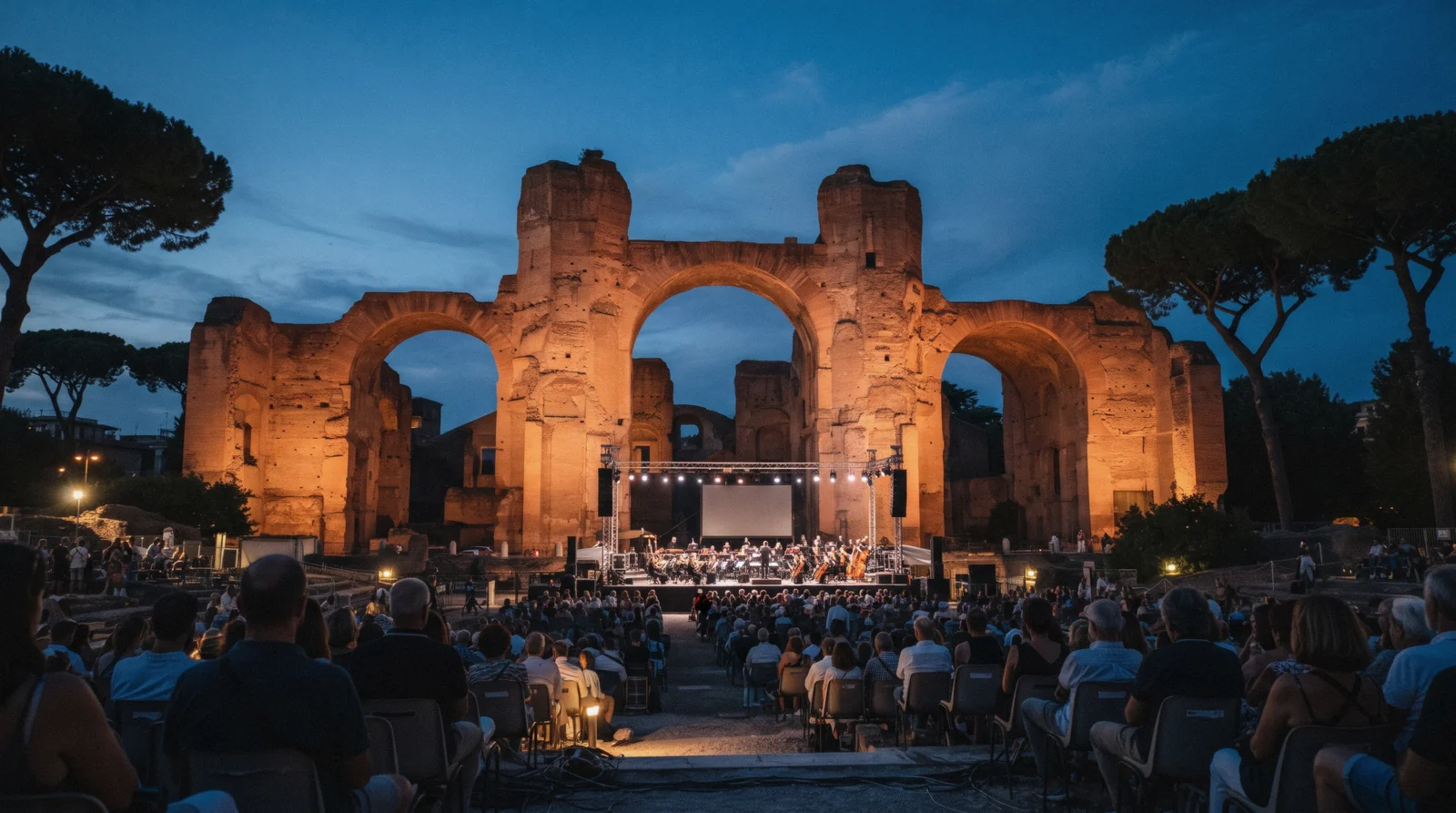
The baths of Caracalla opera experience is two visits in one. By day the ruins are among Rome's greatest ancient sites, best seen with an archaeologist guide or an audio app. By summer the same grounds hosted open-air opera from 1937 until the festival moved to the Circus Maximus, and in 2026 to the Circus Maximus itself while the Baths were under restoration. For every venue, see our guide to the opera houses in Rome.
Quick answer Caracalla opera in one answer
The Baths of Caracalla are a Roman bath complex inaugurated in AD 216, where the Teatro dell'Opera di Roma has staged open-air opera since 1937, starting with Lucia di Lammermoor. In summer 2026 the festival moved to the nearby Circus Maximus while the Baths were under restoration. We sell the daytime Baths tours, not the opera seats.
Key takeaways
- Visit the Baths by day on the Baths and Circus Maximus tour with an archaeologist, entry included.
- Festival seats are sold only by the theatre. See how Rome opera tickets work before you buy.
- If the festival is sold out, open-air opera on a terrace above Piazza Navona keeps the summer-night feeling.
Key facts
Opening hours
| Summer opera festival | July evenings, sold by the Teatro dell'Opera |
|---|---|
| The Baths by day | Visit with a ticket or a guided tour, times on each listing |
Closed In 2026 the festival moved to the Circus Maximus while the Baths are restored
Admission
- Adult
- Baths by day from $10 with an audio guide app
- Reduced
- Guided tour with the Circus Maximus from $73
Planning it
- Time needed
- Our estimate: 1 to 2 hours for the Baths, more if you add the Circus Maximus
- Book ahead
- Optional — walk-up usually fine
- Address
- Terme di Caracalla, Viale delle Terme di Caracalla 52, 00153 Rome
The Baths of Caracalla by day: visits compared
Daytime ways in: guided tours and entry tickets, side by side with the listed price, length and what the price includes.
Do you want a guide, or to go round at your own pace?
| Option | Price | Length | Includes | Book |
|---|---|---|---|---|
| Caracalla Baths and Circus Maximus guided tourFirst-time visitors who want the opera-and-ruins story told properly, with the smallest groups | $73 per person | 1.5 hours | Baths entry, archaeologist guide, headsets | Check Availability |
| Caracalla Baths and Circus Maximus, on ViatorThe same route booked through Viator, for people who keep their bookings in one app | $73.69 per person | 1.5 hours | Baths entry, archaeologist guide, headsets | Check Availability |
| Caracalla Baths express tourVisitors short on time who want a guided Baths-only walk in under an hour | $66 per person | 1 hour | Baths entry, guide, headsets | Check Availability |
| Baths of Caracalla ticket with audio guide appBudget travellers and slow wanderers who prefer an app to a group | $10 per person | About 2 hours | Baths entry, audio guide app with 17 stops | Check Availability |
Prices are the platforms' own listings, in US dollars. Figures current in Q4 2026.
Visits to the Baths of Caracalla by day
Every way to see the Baths of Caracalla by day, from a plain entry ticket to a guided tour.
 from $73
Most reviewed
Visit · by day
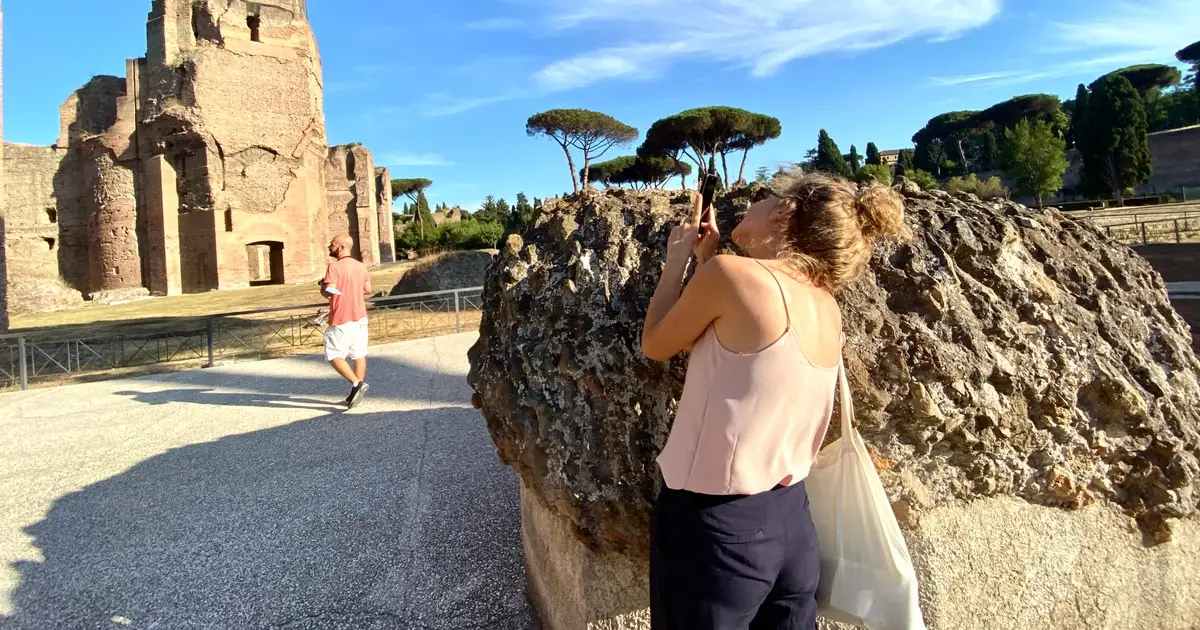
Rome: Caracalla Baths & Circus Maximus, Private or Shared
An archaeologist takes you round the Baths where the summer opera began, then to the Circus Maximus.
Check Availability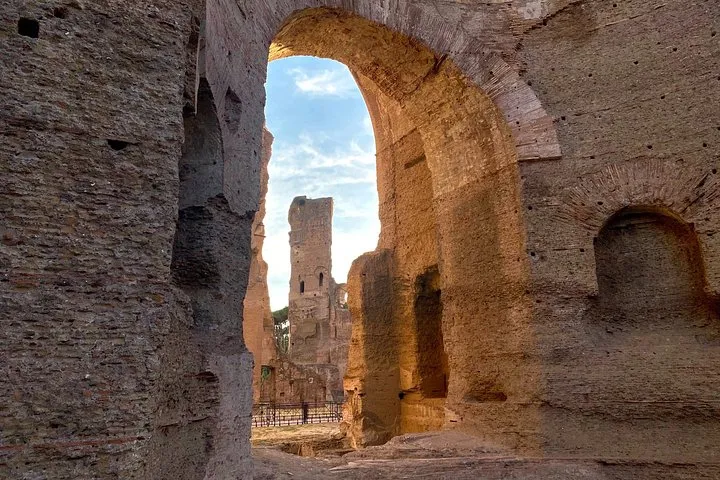 from $73.69
On Viator
Visit · by day
Rome: Semiprivate or Group Tour Caracalla Baths & Circus Maximus
The same 90-minute Baths and Circus Maximus tour sold on Viator.
Check Availability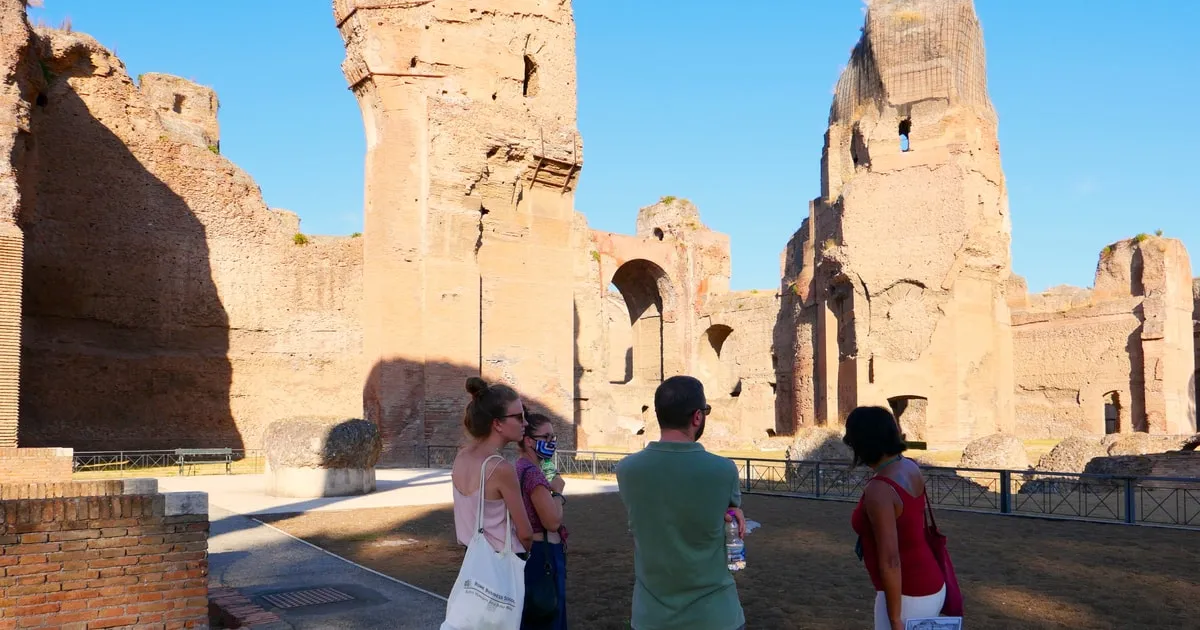 from $66
One hour
Visit · by day
Rome: Caracalla Baths Express Small-Group or Private Tour
A one-hour guided walk through the bath halls, small group or private.
Check Availability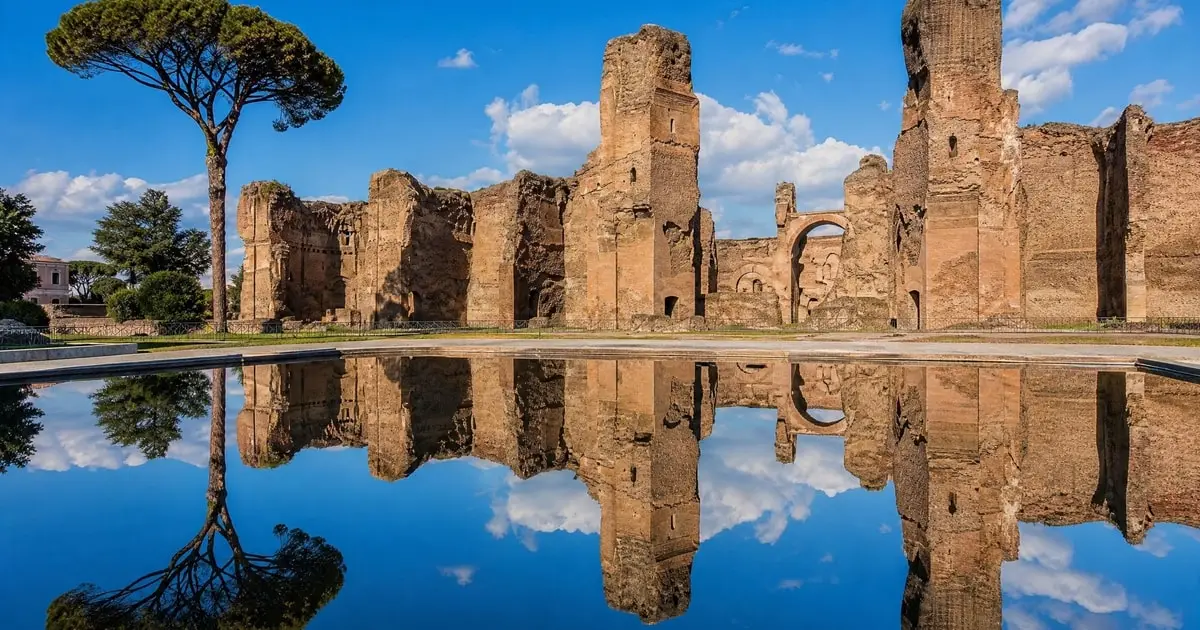 from $10
Lowest price
Visit · by day
Rome: Ancient Baths of Caracalla Ticket & Audio Guide App
Your entry to the Baths of Caracalla with an app audio guide, at your own pace.
Check AvailabilityPrices, ratings and details are the platform's own. dollar figures are the listed prices — the platform bills in your account's currency.
The Baths of Caracalla in the evening: concerts compared
Evening tickets: an opera in concert, an arias programme or a concert with a drink, with the listed price, length and what the ticket includes. The summer opera seats are sold by the Teatro dell'Opera di Roma at operaroma.it, and on the night at the open-air venue from 90 minutes before the start.
A whole opera in concert, or an hour of arias?
| Option | Price | Length | Includes | Book |
|---|---|---|---|---|
| Terrazza Borromini open-air opera with aperitifMost reviewed terrace | from $176 | 80 minutes | Reserved table, opera concert, wine and Italian cheeses and salumi | Check Availability |
| Four Seasons at San Nicola in CarcereAncient setting | from $33 | 1.5 hours | Concert ticket | Check Availability |
| The Three Tenors at St Paul's Within the WallsTop rated | from $39 | 1.5 hours | Concert ticket | Check Availability |
Prices are the platforms' own listings.
Concerts at the Baths of Caracalla
Evening tickets at the Baths of Caracalla. The summer opera seats are sold by the Teatro dell'Opera di Roma at operaroma.it, and on the night at the open-air venue from 90 minutes before the start.
 from $176
Most reviewed terrace
Concert / show · evening
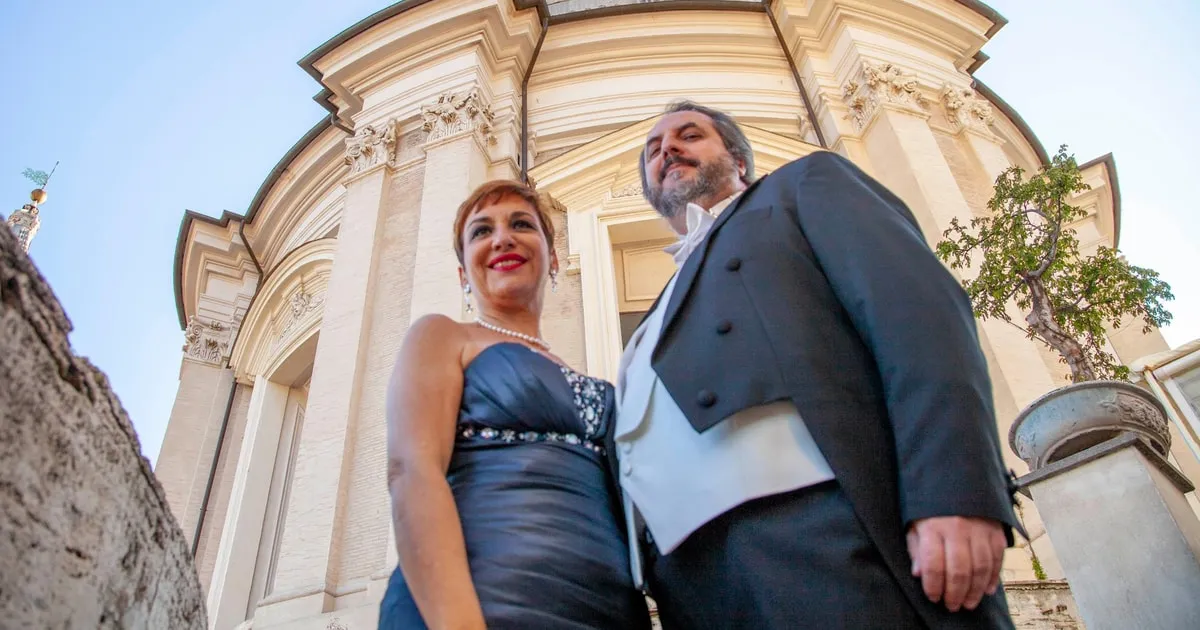
Rome: Terrazza Borromini Open-Air Opera with Aperitif
Arias on the terrace of Palazzo Pamphilj above Piazza Navona and Bernini's fountain, with a glass of wine.
Check Availability from $33
Ancient setting
Concert / show · evening
Rome: Vivaldi's Four Seasons at the Basilica of San Nicola in Carcere
I Virtuosi dell'Opera di Roma play the Four Seasons in the Basilica of San Nicola in Carcere.
Check Availability from $39
Top rated
Concert / show · evening
Rome: The Three Tenors at St. Paul's Church Concert Ticket
Three tenors, a string quartet and piano: Nessun dorma, O sole mio and the arias the 1990 concert made famous.
Check AvailabilityPrices, ratings and details are the platform's own. dollar figures are the listed prices — the platform bills in your account's currency.
What the Baths of Caracalla are, and why opera plays among them
One building explains both the archaeology and the festival. Understand the scale and the summer programme makes sense.
The largest bathing hall most people will ever stand in
The Baths opened in AD 216 under the emperor Caracalla and were Rome's second largest public bath complex, after the Baths of Diocletian. They stayed in use until the 530s, when the Gothic War cut the city's water supply and the halls were abandoned. At their height the daily capacity is thought to have been 6,000 to 8,000 bathers, with Olympiodorus of Thebes recording 1,600 simultaneous visitors. The baths were heated by a hypocaust, burning coal and wood under the floors, with water fed by a dedicated aqueduct, and entry was free to the public.
That scale is the whole point. The calidarium, the hottest hall, was big enough that in 1938 the festival built an auditorium for 20,000 people inside it. Standing on the site, you can see why an opera company looked at these vaults and thought in festival numbers.
| Fact | Figure |
|---|---|
| Inaugurated | AD 216 under Caracalla |
| In use until | the 530s |
| Daily capacity | 6,000 to 8,000 bathers (thought) |
| 1938 festival auditorium | 20,000 seats in the calidarium |
Why it matters to opera lovers
The open-air opera began here on 1 August 1937 with Lucia di Lammermoor, sung by Toti Dal Monte and Beniamino Gigli. Aida is the opera most often staged at the Baths, which fits the monumental Egyptian setting the ruins supply for nothing. Performances ran from 1937 to 1993, with a gap from 1940 to 1945 for the war, and the company returned in 2001 on a movable stage set apart from the ruins so the ancient fabric would not carry the weight.
On 7 July 1990, the evening before the World Cup final, the first Three Tenors concert was sung at the Baths: Carreras, Domingo and Pavarotti with Zubin Mehta. The recording became the best-selling classical album of all time. For many opera lovers, that single night is why the words Baths of Caracalla and open air opera belong together. The wider story of opera in Rome grew around seasons like this one.
What you see on a visit, in walking order
The visit route is a loop through the bathing block and out across the exercise grounds. A guide turns bare walls into a plan you can read.
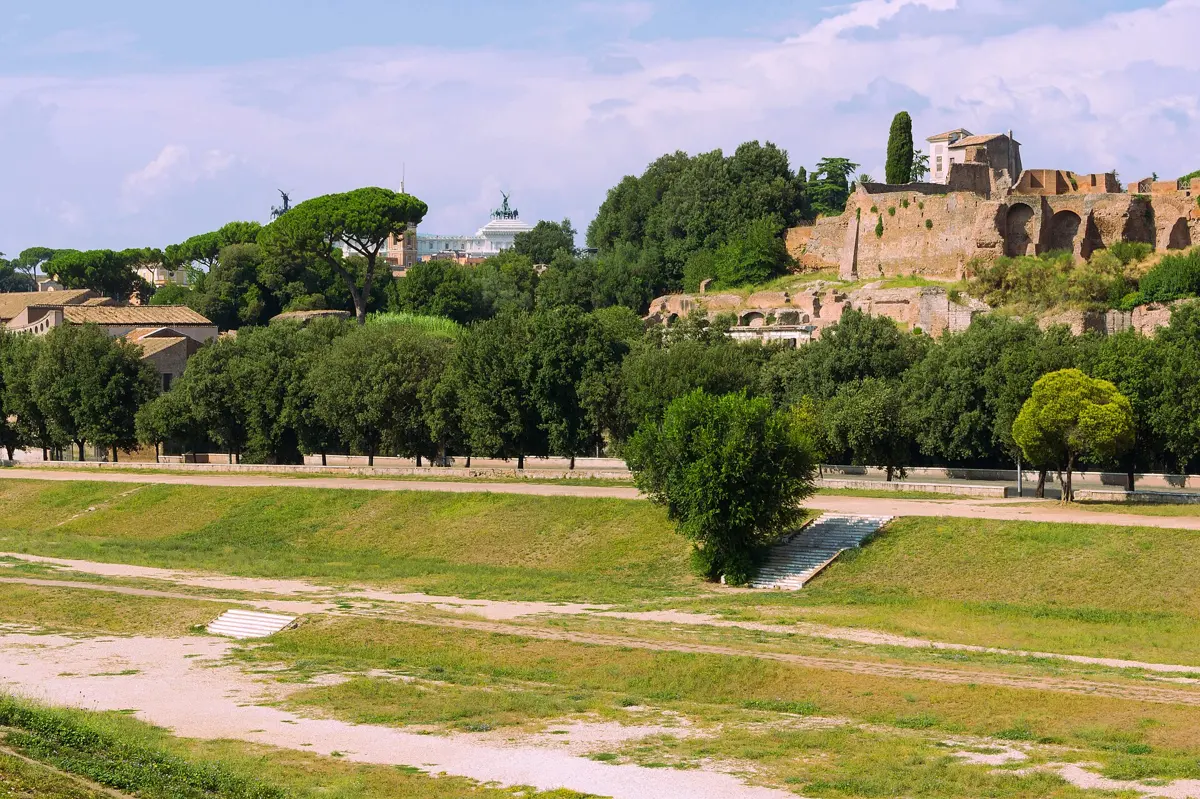
The Circus Maximus, where the opera's summer festival moved in 2026. Photo: Jebulon, CC0, via Wikimedia Commons
From the entrance to the hot rooms
Enter from Viale delle Terme di Caracalla 52. The route moves through the service tunnels and furnaces first on some tours, then up into the main block. The sequence of halls ran cold to hot: the frigidarium for cold bathing, the tepidarium as a warm buffer, and the calidarium at the far end, where the sun-heated glass windows and underfloor heating kept the water hot. This is the hall that held the 20,000-seat opera auditorium in the festival's early years.
The audio guide app covers 17 stops, which is enough to keep a self-guided walk to about two hours. Guided groups move faster, in about 90 minutes for the Baths plus the Circus Maximus, because an archaeologist points at a wall and tells you what it was rather than letting you work it out from a panel.
| Stop | What it was |
|---|---|
| Entrance, Viale delle Terme di Caracalla 52 | Modern entry on the southwest side |
| Service levels | Furnaces and tunnels of the hypocaust heating system |
| Frigidarium | The cold-bathing hall at the centre of the plan |
| Calidarium | The hot hall, home of the 20,000-seat opera auditorium from 1938 |
The grounds, the sculptures and the lost decorations
Around the bathing block run the palaestrae, the open exercise grounds, and the library spaces. Excavations from 1545 to 1547 under Pope Paul III pulled out so much sculpture that a museum had to be created for it: the finds include the Farnese Bull and the Farnese Hercules, now among the most famous ancient sculptures anywhere. Mosaics recovered in 1824 went to the Vatican Museums.
The ruins were quarried for centuries. Stone from the Baths went into churches and palaces, into Pisa Cathedral and Santa Maria in Trastevere, and into the Loggia of the Benediction at St Peter's. A recently opened underground domus, built under Hadrian in 134 to 138 and demolished in 206, now shows frescoed ceilings and a lararium to visitors. Recently excavated, worth the extra look if your ticket or tour covers it. A guide on the express Baths tour will fit it into the hour.
Hours, dress and the rules that catch people out
The Baths have their own rhythm and the festival has strict rules. Both reward arriving prepared.
Timing your visit
The Baths are an outdoor site, so go early in summer: the first opening hour is the coolest and quietest (our estimate). Guided tours meet by the Circo Massimo metro stop, at Viale Aventino 3 for the private or shared tour and at the metro exit by the FAO building for the Viator listing. Build in ten minutes to find the meeting point (our estimate).
Dress for the site, not for a museum: there is little shade, so a hat and water in summer are the listed advice, and shoes that survive gravel. The Baths of Caracalla ticket with the audio app asks you to bring your own headphones and a charged phone.
| Practical point | The rule |
|---|---|
| Best time of day | First opening hour on weekdays (our estimate) |
| What to bring | Hat and water in summer. Headphones and a charged phone for the audio app |
| Meeting points | Viale Aventino 3, or the Circo Massimo metro exit by the FAO building |
Festival rules worth knowing before you buy a seat
The bad-weather rule is the one that matters. A performance is never cancelled before its scheduled start. The theatre may delay or suspend it for up to 100 minutes, and if it is stopped after the first act there is no refund. Pack a light layer: evenings are warm but it cools after midnight, which is the opera dress code advice for open-air summer nights in general.
Same-day seats are sold at the open-air venue from 90 minutes before the start, so a gamble on the night is possible but not a plan. Once the performance starts, the theatre's normal latecomer rules apply as indoors: latecomers wait rather than walk in mid-act. Photos and recording are banned in performance, the same house rule as at the indoor opera house.
Getting there and how much time to give it
The Baths sit south of the centre between the Aventine and the Circus Maximus, and the metro stop that serves them also served the 2026 festival.
Getting there
Circo Massimo metro stop on line B is the stop for both the Baths and the stadium. From the exit it is a short walk to the Baths entrance on Viale delle Terme di Caracalla (our estimate). The stop is also where the guided tours meet, which makes arriving by metro the simplest plan: you surface next to your guide.
On foot the Baths link naturally to the Aventine and the Colosseum side of the centre, and the Circus Maximus is about a 10-minute walk from the Baths (our estimate). If you are planning an evening around opera venues, the Baths are the southern anchor, with the opera house near Repubblica at the northern end of the line A and B network.
| Routing | From the Baths |
|---|---|
| Baths to Circus Maximus | About a 10-minute walk (our estimate) |
| Circo Massimo metro, line B | Serves both the Baths and the stadium |
| Tours meet | Viale Aventino 3, or the metro exit by the FAO building |
How much time to give it
The self-guided audio ticket allows about two hours and that is generous for a first visit. A guided tour compresses it: one hour for the Baths alone on the express tour, 1.5 hours if you add the Circus Maximus. Add travel and you have a half-day outing that pairs well with a morning at the Colosseum or an afternoon on the Aventine.
For a festival night, arrive earlier still. Same-day seats go on sale 90 minutes before the start, and the open-air setting is worth seeing in daylight before the stage lights take over.
From imperial baths to open-air stage
Key dates in the site's two lives, as ruins and as a stage.
-
AD 216
The Baths are inaugurated
Built under Septimius Severus and completed under Caracalla, and free to every Roman.
-
530s
The waters stop
The Gothic War cuts the aqueducts and the baths are abandoned soon after.
-
1545 to 1547
The sculptures come out
Excavations under Pope Paul III uncover the Farnese Bull and Farnese Hercules, creating a museum collection.
-
1824
Excavations resume
Count Egidio di Velo's dig recovers mosaics now in the Vatican Museums.
-
1937
Opera begins
Open-air opera starts on 1 August with Lucia di Lammermoor starring Toti Dal Monte and Beniamino Gigli.
-
1938
An auditorium for 20,000
A temporary auditorium is built in the calidarium for the festival audience.
-
7 July 1990
The Three Tenors
Carreras, Domingo and Pavarotti sing at the Baths with Zubin Mehta on the eve of the World Cup final, producing the best-selling classical album of all time.
-
2026
The move to the Circus Maximus
With the Baths under restoration, the festival runs at the Circus Maximus from 29 June to 31 July, with Aida, Romeo and Juliet and Carmina Burana.
Sources: Baths of Caracalla Wikipedia, Teatro dell'Opera di Roma summer programme, Carreras Domingo Pavarotti in Concert Wikipedia.
Dos and don'ts at the Baths of Caracalla
Do
- Book a morning tour in summer, when the site is coolest and quietest (our estimate).
- Bring a hat and water, as the outdoor tours advise.
- Bring your own headphones and a charged phone if you take the audio-guide ticket.
- Add the Circus Maximus if you want the 2026 festival story as well as the ruins.
- For a festival night, arrive early: same-day seats are sold from 90 minutes before the start.
- Pack a light layer for after midnight at open-air performances.
Don't
- Don't count on a refund if rain stops a festival show after the first act. There is none.
- Don't expect a performance to be cancelled before its start time. The theatre delays or suspends for up to 100 minutes instead.
- Don't arrive late to a festival performance. Normal latecomer rules apply and entry waits for a break.
- Don't photograph or record during a performance. It is banned, as indoors.
- Don't skip the underground domus if your tour covers it. It is the newest part of the visit.
- Don't leave the Baths and Circus Maximus to the same hour as the Colosseum crowds. The site rewards slack.
Five things most visitors do not know
Details that change how the site reads once you know them.
Small facts, big difference
Rome's baths were not a luxury for the few. These were free and open to the public, which is why they could hold thousands of bathers a day.
The list below is the short version of what guides explain on site.
- The Baths were free to use when they opened, funded by the emperor, with a daily capacity thought to be 6,000 to 8,000 bathers Wikipedia: Baths of Caracalla.
- An underground noble house built under Hadrian in 134 to 138 has been opened to visitors, with frescoed ceilings and a lararium Wikipedia: Baths of Caracalla.
- The first Three Tenors concert was sung at the Baths on 7 July 1990, the evening before the World Cup final, and the album became the best-selling classical record of all time Wikipedia: Carreras Domingo Pavarotti in Concert.
- The festival's 1938 auditorium seated 20,000 people inside the calidarium, one of the largest opera audiences ever housed facts file.
- Stone from the ruins travelled far: it was quarried for Pisa Cathedral and Santa Maria in Trastevere, and Pope Pius II used it for the Loggia of the Benediction at St Peter's Wikipedia: Baths of Caracalla.
Map: the Baths and what is around them
The Baths sit south of the centre. The pins below are the sites worth pairing with a visit.
- 1 Baths of CaracallaThe Roman bath complex of AD 216 and the original home of open-air opera from 1937.
- 2 Circus MaximusThe ancient chariot-race stadium that hosted the 2026 Caracalla Festival while the Baths were under restoration.
- 3 ColosseumRome's amphitheatre, an easy metro stop or a walk north from the Baths.
- 4 San Nicola in CarcereA basilica built into Roman temples near the Theatre of Marcellus, now a Vivaldi concert venue.
- 5 Campo de' FioriThe market square two minutes from the Palazzo della Cancelleria, whose evening concerts are the way inside the palace.
- 6 Piazza NavonaThe baroque square under whose rooftops the Palazzo Pamphilj terrace opera concerts play in summer.
Numbers match the pins on the map.
Nearby the Baths of Caracalla
Three pairings that work with a Baths visit, by day or by night.
Circus Maximus
The ancient chariot-racing stadium between the Aventine and Palatine hills held over 150,000 spectators and hosted the Caracalla Festival in 2026. The Baths and Circus Maximus tour covers both in one 90-minute walk.
About 10 min walk (our estimate) Read the guideSan Nicola in Carcere
A basilica built into Roman temples by the Theatre of Marcellus, where I Virtuosi dell'Opera di Roma play Vivaldi's Four Seasons in the evening. Book the concert and the Baths on the same day.
About 15 min walk (our estimate) Read the guideTeatro dell'Opera di Roma
The company's indoor house, the Teatro Costanzi, runs the autumn to early summer season before the company moves outdoors for the summer. See the opera house guide for tours and seat prices.
Across the centre, metro to Repubblica (our estimate) Read the guideBaths of Caracalla opera: your questions
Are there concerts at the Baths of Caracalla?
Yes. The Teatro dell'Opera di Roma has staged open-air opera at the Baths since 1937, from Lucia di Lammermoor with Beniamino Gigli to the first Three Tenors concert in 1990. In summer 2026 the festival moved to the Circus Maximus while the Baths were under restoration. Festival seats are sold only by the theatre, listed on the Rome opera tickets guide.
What is special about the Baths of Caracalla?
They were Rome's second largest bath complex, inaugurated in AD 216, free to the public and in use until the 530s. The calidarium was large enough to hold a 20,000-seat opera auditorium in 1938. Sculptures excavated here include the Farnese Bull and the Farnese Hercules. Visit with the guided tour to get the whole story.
Where can I see the Baths of Caracalla opera now?
In summer 2026 the festival ran at the Circus Maximus, about a 10-minute walk away, with Aida, Romeo and Juliet and Carmina Burana between 29 June and 31 July. Where the company plays each summer depends on restoration work, so check the dates on the theatre's own listing.
How much are Baths of Caracalla tickets?
For the daytime visit, our cheapest option is the ticket with audio guide app at $10 per person, and guided tours with entry run from $66 to $73.69. Festival opera seats are sold only by the theatre, so see its published prices on the opera tickets guide.
What happens if it rains at a Caracalla performance?
A performance is never cancelled before its start time. The theatre may delay or suspend it for up to 100 minutes, and if it is stopped after the first act there is no refund. Bring a light layer, since open-air evenings cool after midnight. More rules in the dress code guide.
Is the Three Tenors concert at the Baths the original one?
The 1990 concert with Carreras, Domingo and Pavarotti and Zubin Mehta was a single night at the Baths. Concerts sold in Rome today are tributes by today's tenors, not the original singers. The closest thing to that programme is the Three Tenors concert at St Paul's Within the Walls, sung indoors on Via Nazionale.
Can I visit the Baths and hear opera on the same night?
Yes. Do the Baths by day on the express tour, then move to an evening concert. If the festival is sold out, the open-air opera with aperitif on the Terrazza Borromini above Piazza Navona keeps the summer-night feeling, and indoor opera concerts run all year. Compare evenings on the opera concerts guide.
How long should I allow for a visit?
Allow about two hours with the audio guide, one hour on the guided Baths-only tour, or 1.5 hours for the Baths plus the Circus Maximus. Add travel time from the Circo Massimo metro stop. First opening hour on weekdays is quietest, by our estimate.
Prices, hours and terms are set by the venue or operator and confirmed at checkout.
We may earn a commission if you book through one of our links, at no extra cost to you. Full affiliate disclosure