 Opera Houses in Rome
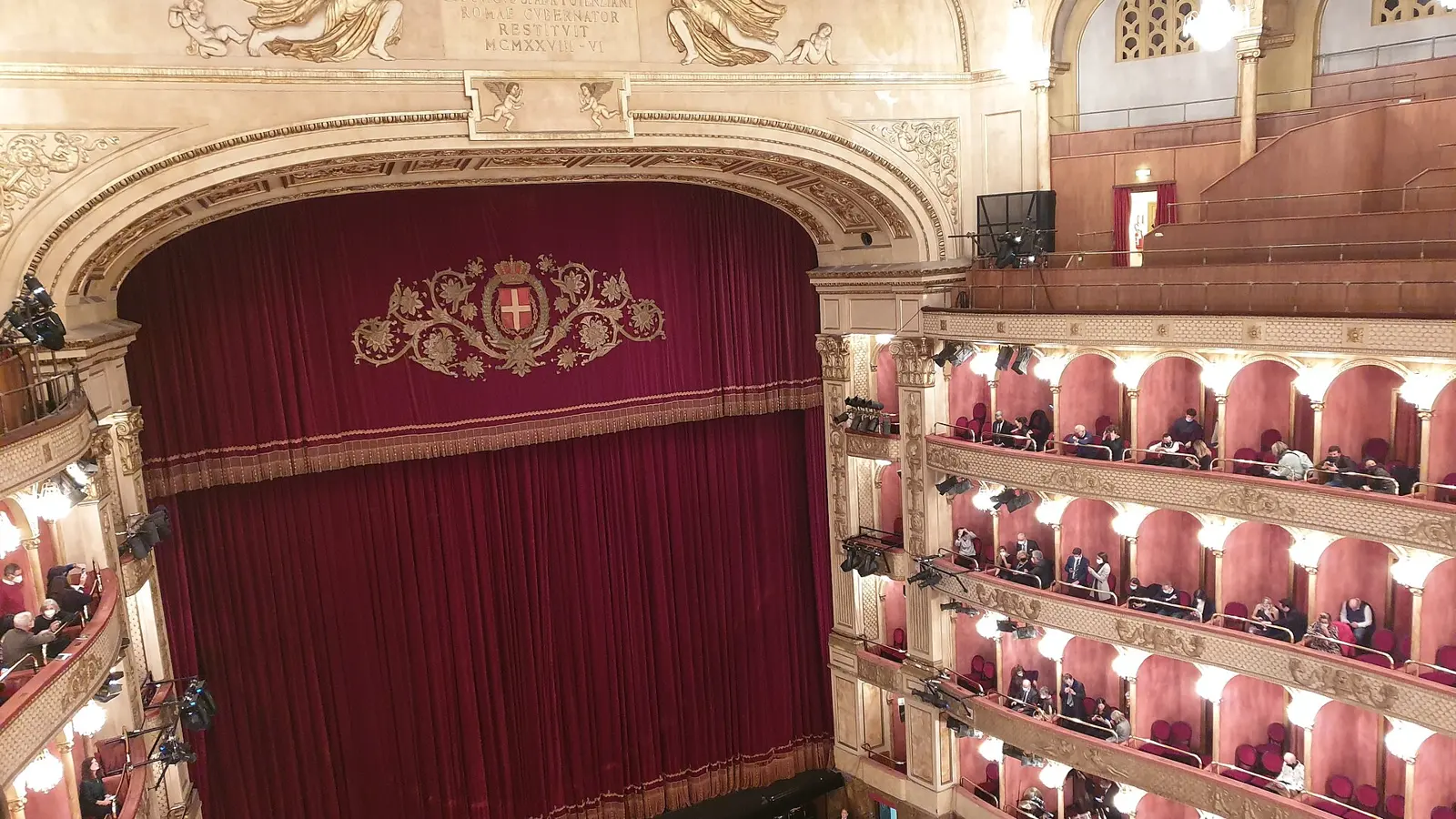
Photo: Udine2812, CC BY-SA 4.0, via Wikimedia Commons
A first time at the opera in Rome is easier than it looks from outside the doors. This guide walks you through the whole evening at the Rome opera house, from picking a first opera to getting home, then does the same for a church concert. It is part of our guide to opera houses in Rome.
Quick answer The short version for first-timers
Pick Tosca or La Traviata for a first opera: both are full of tunes you already know. At the Teatro dell'Opera, bags, umbrellas and cameras go to the cloakroom, phones stay off, and latecomers wait in the foyer until the interval. The cheapest seat is $24.50 (€22) in the gallery. Church concerts are shorter and smart casual is enough.
Key takeaways
- For a full opera night, see Rome opera tickets for the theatre's own prices
- For an easy taster, book the opera arias concert at St Paul's Within the Walls at $28
- Clothes: follow our opera dress code in Rome page, smart casual covers almost every venue
- Plan where to sleep with our where to stay in Rome for the opera guide
Choosing your first opera
Not every opera suits a first night. Two works stand out for beginners, and Rome has a direct connection to one of them.
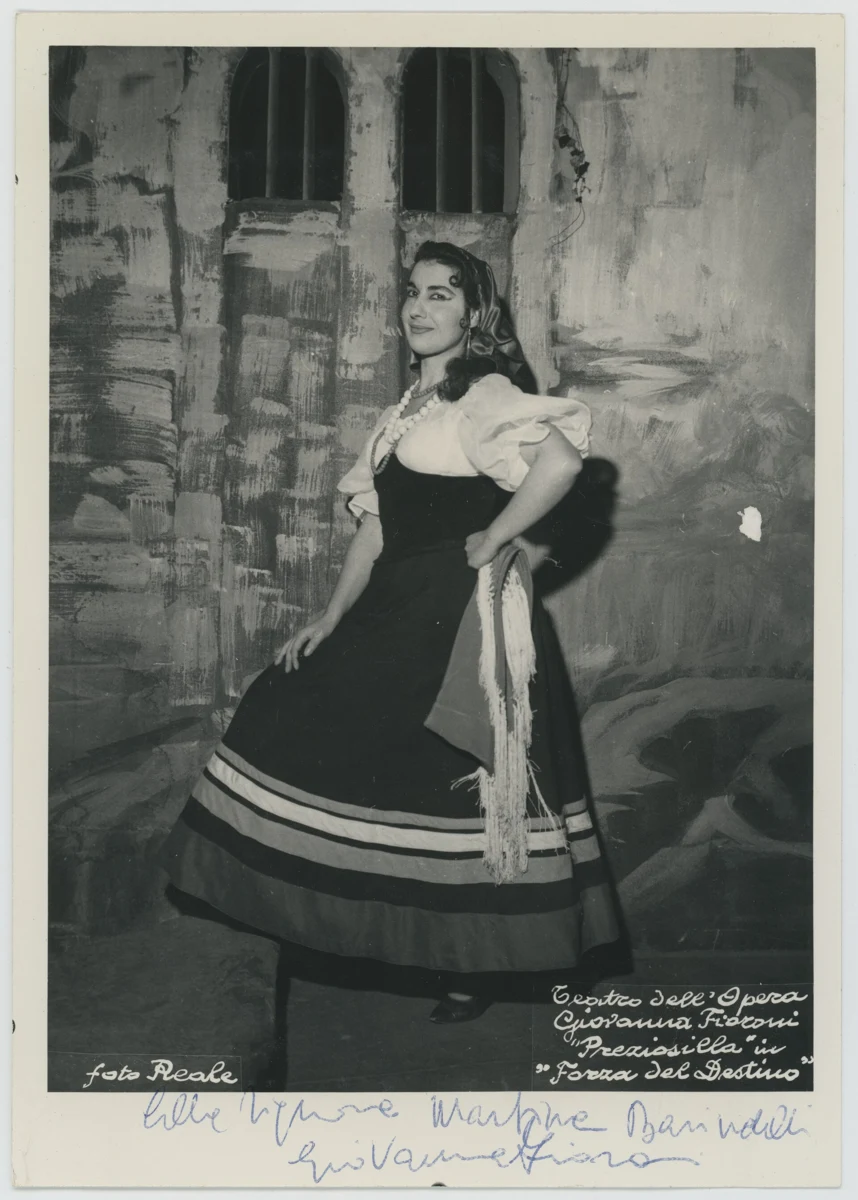
Mezzo-soprano Giovanna Fioroni as Preziosilla in La forza del destino at the Teatro dell'Opera di Roma. Photo: Unknown Unknown, Public domain, via Wikimedia Commons
Tosca: the Rome opera
Tosca premiered at the Teatro Costanzi, as the Rome opera house was then called, on 14 January 1900. It is Puccini at his most direct: murder, torture and a leap from a castle rampart, all wrapped around arias you will recognise even if you think you do not know opera. It is also set in Rome itself.
Act 1 happens in Sant'Andrea della Valle, act 2 in Palazzo Farnese and act 3 on the terrace of Castel Sant'Angelo, three places you can walk in a single morning. Seeing the opera after seeing its settings is a pleasure few cities can offer. The house today seats 1,560, down from the original 2,212 of 1880, so the hall feels intimate rather than vast.
- Best for: a story you can follow without a libretto
- Famous moments: Recondita armonia, Vissi d'arte, the Te Deum that closes act 1
La Traviata: the crowd-pleaser
Verdi's La Traviata first played at La Fenice in Venice and is now among the most frequently performed operas anywhere, which makes it a safe first pick: the Drinking Song and Sempre libera are everywhere, from films to adverts. It is a three-act tragedy about Violetta, a Paris courtesan, and runs about two and a quarter hours with plenty of melody to hold a newcomer. If the theatre schedule does not fit your trip, a concert staging plays five minutes away in the American church on Via Nazionale.
The staging at St Paul's Within the Walls has singers, a small orchestra and some costume, so you get the whole story in about two hours without a theatre booking.
The alternative: an arias evening
If sitting through three acts feels like too much for a first go, book an arias concert instead. You hear the famous numbers from La Boheme, Tosca, La Traviata and Don Giovanni in about 90 minutes, with no plot to follow and no surtitles to read. Opera concert in Rome lists the options across churches and palaces, and the church setting means you can walk back to dinner afterwards. Many people do the arias night first, then commit to a full opera later in the trip.
Arriving: cloakroom, doors and latecomers
The house rules at the Teatro dell'Opera are written down and worth knowing before you go. None of them are hard, but arriving prepared keeps the evening calm.
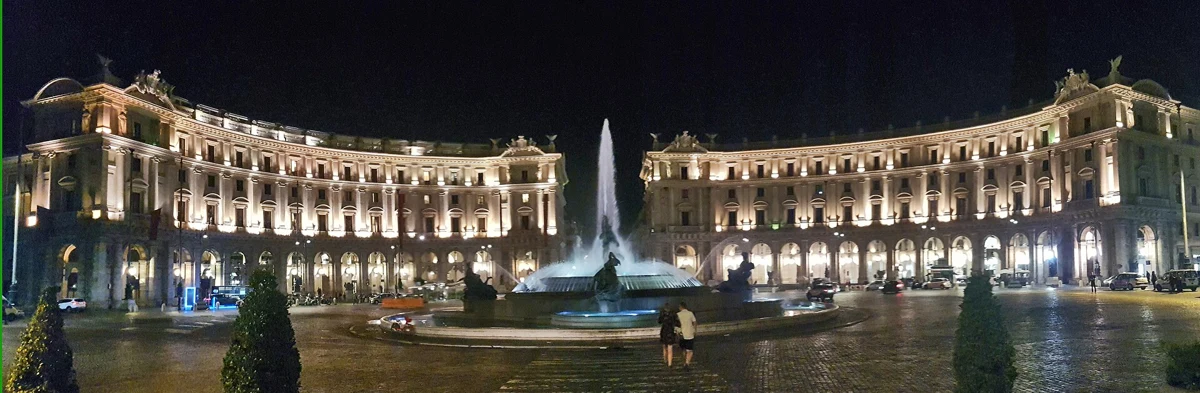
Piazza della Repubblica at night, the metro stop for the opera house. Photo: Valentin Kordes, CC BY-SA 4.0, via Wikimedia Commons
Get there early enough
Aim to arrive 30 to 45 minutes before the curtain. That gives you time to collect tickets, drop bags and find your seat without rushing. Same-day tickets are sold at the venue from one hour before the performance, so the box office area gets busy close to start time.
The theatre is on Piazza Beniamino Gigli 7, about five minutes on foot from the Repubblica metro stop on line A and roughly ten from Termini station, which makes it simple from most central hotels.
The cloakroom is not optional for bags
The official rules are clear: umbrellas, hats, bags and cameras go to the cloakroom. That means your day bag, your camera body and even a folded umbrella cannot come into the auditorium with you. Travel light or plan the extra two minutes at the counter.
Phones may not be used in the auditorium at all once things begin, so put yours on silent and back in a pocket before you take your seat.
- Umbrellas, hats, bags and cameras: cloakroom
- Phones: no use in the auditorium
- Photos and recording: banned
If you are late, you wait
Once the performance starts, nobody enters the stalls or the numbered gallery and balcony seats. Latecomers wait in the foyer and are seated at the interval. This is the single rule that catches most first-timers, especially if dinner runs long.
Roman dinner service starts late, so either book an early table or skip the long sit-down meal before the show. The same logic applies in reverse at church concerts: several listings simply refuse entry to late arrivals, so treat the start time as firm.
The seats: stalls, boxes and gallery
Where you sit changes both the price and the experience. Here is how the house is laid out and what the theatre's published prices look like.
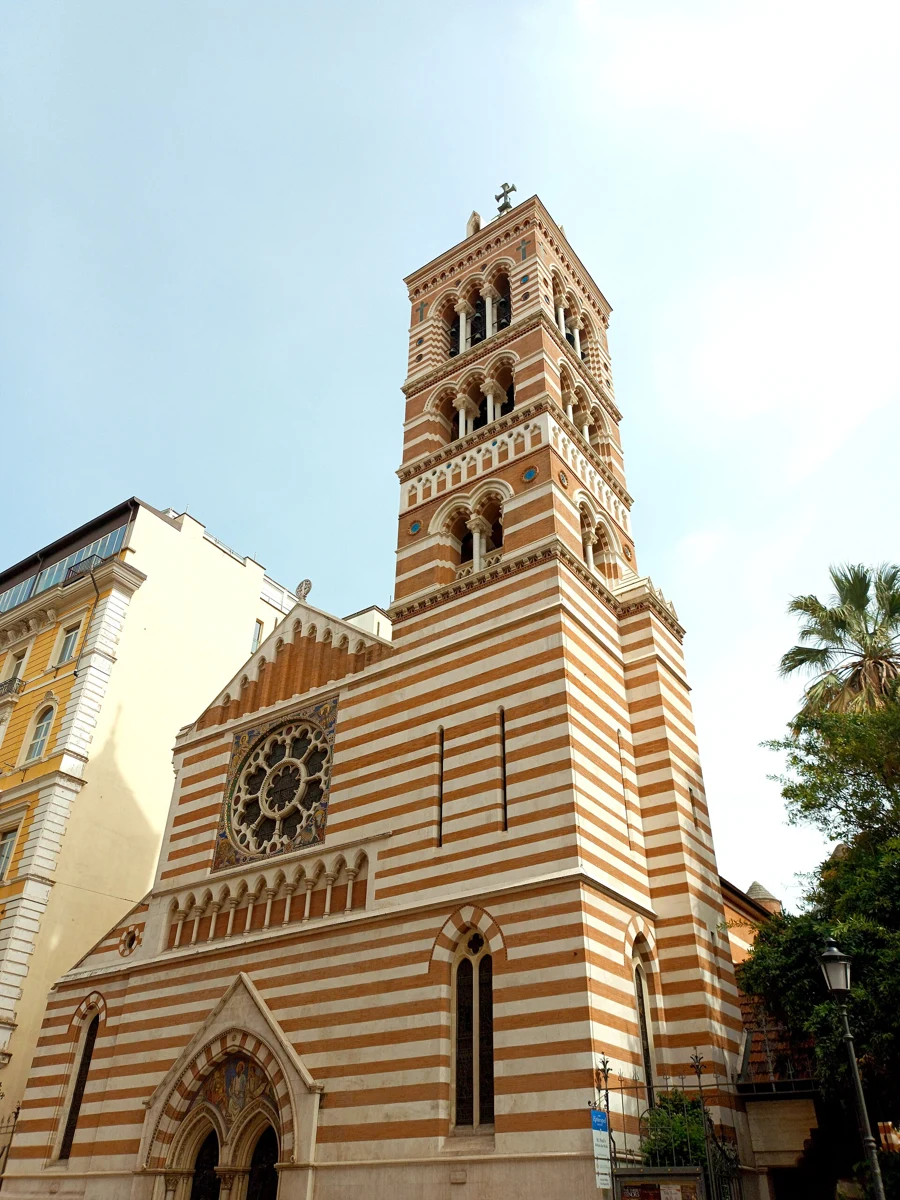
St Paul's Within the Walls, the church of the evening opera concerts. Photo: acediscovery, CC BY 4.0, via Wikimedia Commons
How the auditorium is arranged
The present house keeps the horseshoe shape the original architect chose for its acoustics, treating the interior as a resonance chamber. You have the stalls on the floor, tiers of boxes around the walls, and the gallery at the top. The gallery is split into rows 1 to 3 and rows 4 to 8 for pricing.
There is no bad-sounding seat in a horseshoe of this size, but sightlines improve as you move down and forward.
What seats cost
These are the theatre's published list prices for opera performances. The theatre sells its own season seats through its box office on Piazza Beniamino Gigli and operaroma.it, and this site sells nothing for the theatre, so these are the figures you will meet there.
Our pick for a first visit
Take gallery rows 1 to 3, repeat performance, at $27.90 (€25). For the price of a pizza you sit under the frescoed dome with the whole house in view, and the sound is excellent. If the night matters more than the budget, a repeat-performance stalls seat at $139.40 (€125) puts you close enough to see the singers' faces.
A first opera should feel comfortable, and the gallery does that without a second mortgage.
Opera seat prices at the Teatro dell'Opera
The theatre's published list prices, dollar first with the euro figure. Repeat performance means any night that is not the premiere. The theatre sells these seats itself through its box office and operaroma.it.
| Seat and rows | Repeat performance | Premiere |
|---|---|---|
| Gallery rows 4-8 (cheapest) | $24.50 (€22) | not stated |
| Gallery rows 1-3 | $27.90 (€25) | not stated |
| Stalls rows 1-13 | $139.40 (€125) | $178.40 (€160) |
Ballet seats are cheaper: $22.30 (€20) in gallery rows 4-8 and $83.60 (€75) in stalls rows 1-13, repeat performance. Same-day tickets are sold at the venue from one hour before the performance. in Q4 2026
During the show: length, surtitles and when to clap
Opera has its own rhythm. Knowing what happens when is the difference between relaxing and worrying you are doing it wrong.
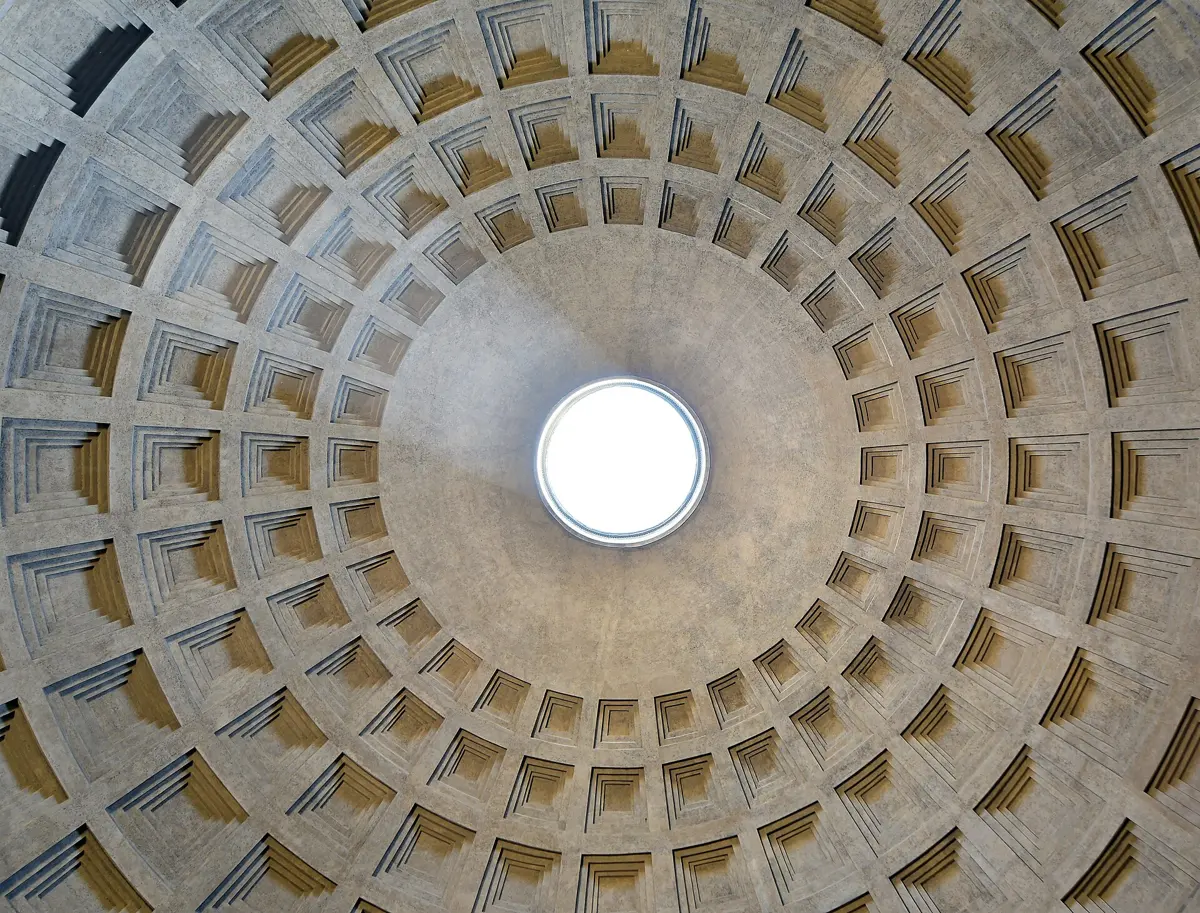
The coffered dome of the Pantheon, where an after-hours concert is played. Photo: Livioandronico2013, CC BY-SA 4.0, via Wikimedia Commons
How long it runs and what an interval is for
A three-act opera such as Tosca or La Traviata usually runs about two and a half hours including one or two intervals, each around 20 minutes. Plan your evening to finish about three hours after the curtain. At the interval the bar opens: coffee, wine and snacks, and the queue is longest in the first five minutes, so wait it out or go straight in.
Nobody rushes at the opera. The cloakroom also reopens if you want to retrieve something.
Surtitles and following the story
The opera is sung in Italian. Modern productions project surtitles, a translation running above the stage, so you can follow every line. Read them before the phrase lands, then look up at the singers.
If you want a head start, read a synopsis of the acts on the metro on the way there, and the whole evening becomes effortless. At concert stagings in churches there are often no surtitles at all, which is where the synopsis trick matters most.
Etiquette: clapping, phones and silence
Clap after an aria if you liked it, and clap with real enthusiasm after big numbers. Shouting bravo for a man, brava for a woman, is welcome and common. Do not clap between the movements of a symphony, but at the opera the rule is generous.
The hard rules are the theatre's own: photos and recording are banned, phones may not be used in the auditorium, and talking should wait for the interval. Unwrap sweets before the music starts, not during the quiet bits.
- Clap after arias and at act ends
- Bravo for a man, brava for a woman
- No phones, no photos, no recording
- Unwrappers are louder than you think: sort sweets early
Dress the part without overthinking
Evening dress is requested on opening nights and premieres only. On ordinary nights there is no written rule, though smart clothes are the norm in the stalls and boxes and smart casual is normal in the gallery. Our full opera dress code in Rome page covers every venue type, so we will not repeat it here.
Short version: you will never look wrong in a jacket or a decent dress, and nobody turns anyone away for looking ordinary.
Getting home after the curtain
The opera lets out into a quiet square and Rome's evening transport has its limits. A little planning ends the night well.
From the theatre
The theatre is a five-minute walk from Repubblica metro on line A, but the metro winds down before midnight, so a late performance may outlast it. Terminating taxis queue around Repubblica and the walk to Termini is about ten minutes if your hotel is that way. Most central hotels are within a 20 to 25 minute walk of Piazza Beniamino Gigli, which is a pleasant end to the evening through streets that stay busy.
Our where to stay in Rome for the opera page sorts hotels by walking distance if you have not booked yet.
From the church concerts
The church and palace concerts finish earlier, usually between 21:00 and 22:30, so normal evening life is still running when you come out. St Paul's Within the Walls sits on Via Nazionale with the Repubblica metro five minutes away. Palazzo della Cancelleria is two minutes from Campo de' Fiori and about ten from Piazza Navona, deep in the restaurant zone, which makes it easy to fold a concert into a dinner night.
Plan dinner after rather than before and the transport problem solves itself.
The same evening at a church concert
If a full opera night feels like a big first step, the church concerts are Rome's friendlier door into opera. They are different animals, and worth taking on their own terms.
What you actually get
Most church events are arias evenings, not staged operas: singers, a piano or a small ensemble, and the greatest hits in a hall that happens to be a church. A few go further. The La Traviata concert staging at St Paul's Within the Walls at $45 gives you the whole opera in concert form, about two hours and ten minutes with singers, a small orchestra and some costume.
Others are single-composer nights, like the Vivaldi Four Seasons in full at $33, 80 minutes with no singing at all. Read the listing honestly: arias, one opera in concert form, or instrumental, and pick what suits the night.
The practical differences
Three things change from the theatre. First, length: expect 50 to 90 minutes, no interval or a short one, so a 50-minute arias concert can end your evening by 21:30. Second, dress: the listings say smart casual, and churches ask that shoulders and knees stay covered.
Third, seating: some venues use unnumbered chairs, first come, first served, which means arriving 20 to 30 minutes early for a good row. At St Paul's the seating is by price category in rows of chairs in the nave, front rows costing more, which removes the queuing.
Which one we would book
For a first taste, the opera arias evening at St Paul's Within the Walls at $28 is the pick: about 90 minutes of Puccini, Verdi and Mozart arias by I Virtuosi dell'Opera di Roma in a working church with Burne-Jones mosaics overhead, and VIP seats add skip-the-line entry. If you want the shortest possible night, the Most Beautiful Opera Arias concert at $38 runs 50 minutes in a small Waldensian church where you sit close to the singers. And if a palace appeals, the opera concert at Palazzo della Cancelleria at $67 gets you into a Renaissance palace that is otherwise closed to visitors, one hour, entered through Bramante's courtyard.
Your first-opera checklist
Everything from the sections above, condensed. Print it mentally and the evening runs itself.
Before you go
Book the ticket and check the start time, since same-day sales at the theatre open one hour before the show and church box offices open from one hour before too. Read a synopsis of the acts so the story needs no effort on the night. Eat early or plan dinner for after, because Roman restaurants and opera curtain times fight each other.
Leave the big bag at the hotel, since bags, umbrellas and cameras all go to the cloakroom at the theatre.
On the night
Arrive 30 to 45 minutes early, or earlier where seats are unnumbered. Charge nothing to your evening but your phone on silent, because it may not be used in the auditorium. Dress smart casual unless it is a premiere, when evening dress is requested.
Clap generously after arias, read the surtitles, order a coffee at the interval, and do not be the person who arrives after the first act has begun, because the doors stay shut until it ends.
- Ticket and start time confirmed
- Synopsis read
- Bags minimised, phone silenced
- Arrive 30-45 minutes early
- Dress smart casual
- Dinner planned before or after, not clashing
The verdict
For a first time at the opera in Rome, do one of two things. If you want the real theatre, book a repeat-performance gallery seat at the Teatro dell'Opera for Tosca, the city's own opera, and arrive early enough to enjoy the chandelier. If you want the music without the formality, take the arias evening at St Paul's Within the Walls at $28 and walk to dinner afterwards. Both are correct answers, and neither requires you to know anything about opera in advance.
For every venue and every evening, start from our guide to opera in Rome.
Bookable first-opera evenings
These are the evenings we would hand a first-timer. They are concert settings in churches and a palace, not productions at the opera house, and each listing says exactly what you get.
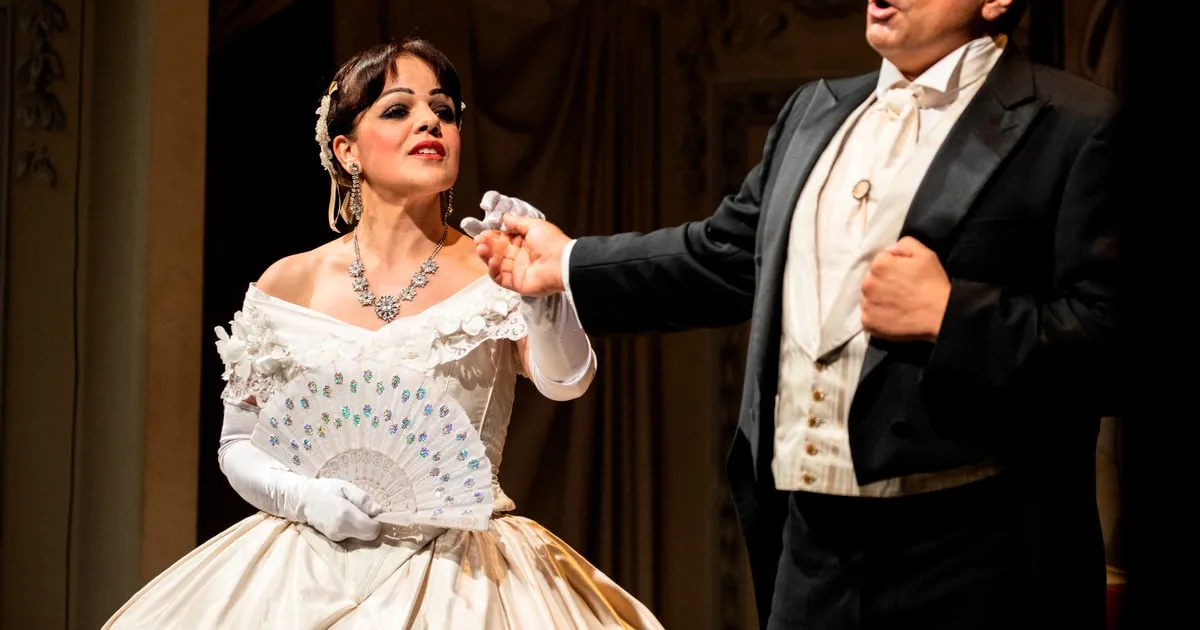 from $45
Most reviewed opera
Concert / show · evening
Rome: La Traviata at St. Paul's Within the Walls
Verdi's La Traviata sung by I Virtuosi dell'Opera di Roma in the nave of the American Church on Via Nazionale, a little over two hours.
Check Availability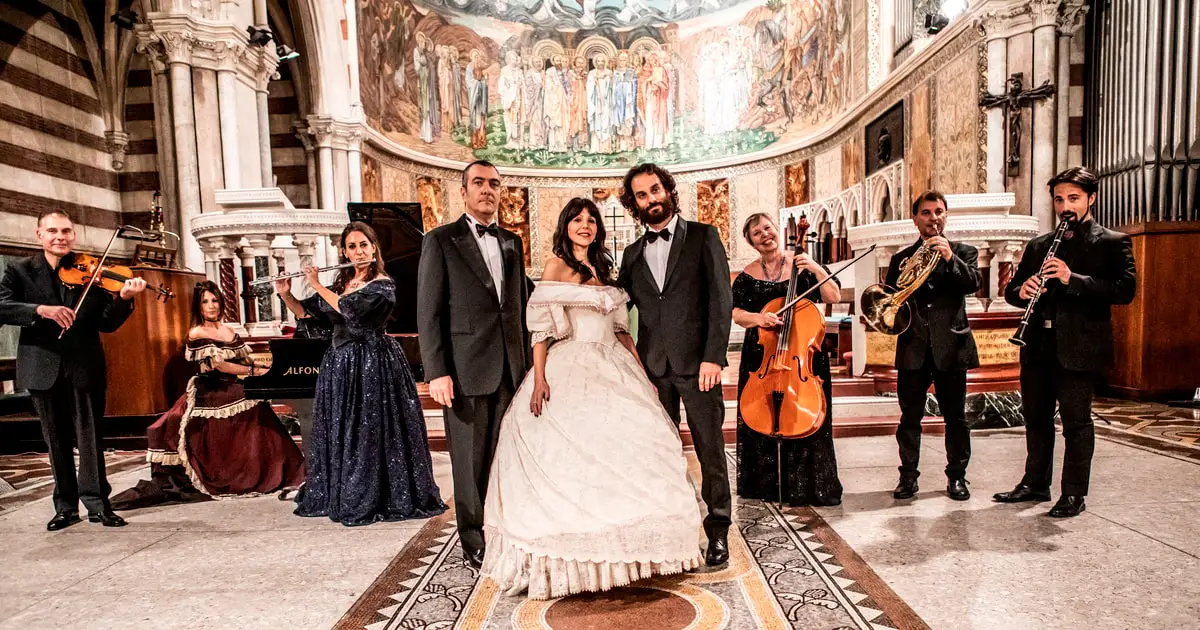 from $28
Lowest price
Concert / show · evening
Rome: St. Paul's Within the Walls Church Opera Arias Ticket
Arias from La Bohème, Tosca, La Traviata and Don Giovanni by I Virtuosi dell'Opera di Roma, about 90 minutes.
Check Availability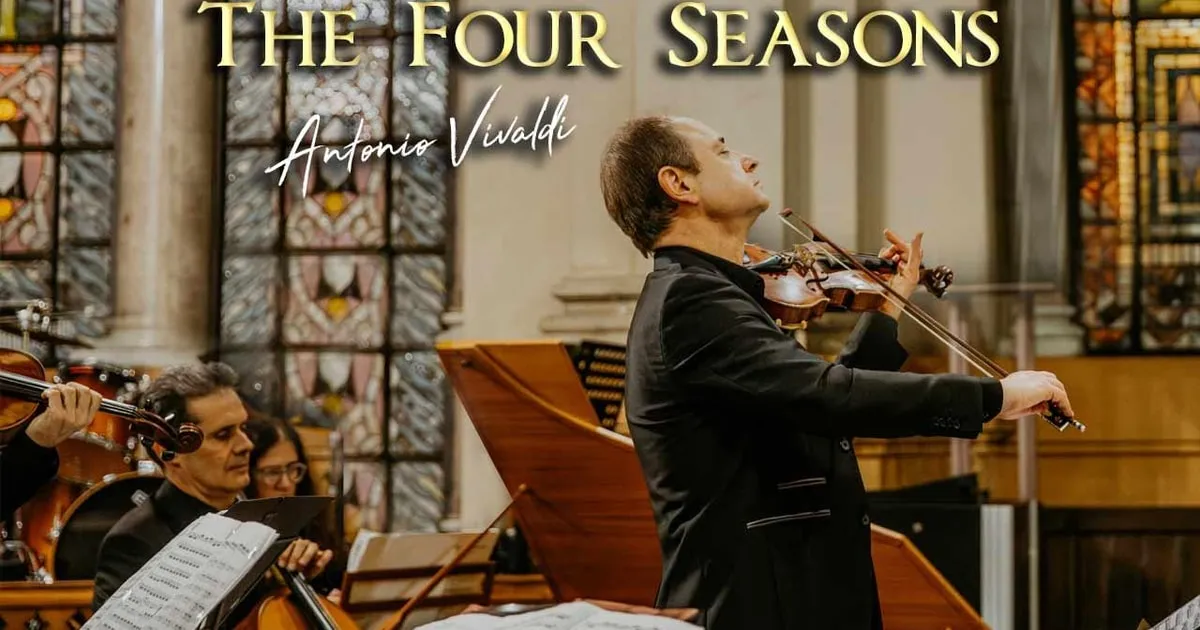 from $33
Most reviewed classical
Concert / show · evening
Rome: Vivaldi Concert Featuring The Four Seasons in Full
The whole of Vivaldi's Four Seasons by the Opera e Lirica ensemble, 80 minutes, Via XX Settembre 122.
Check Availability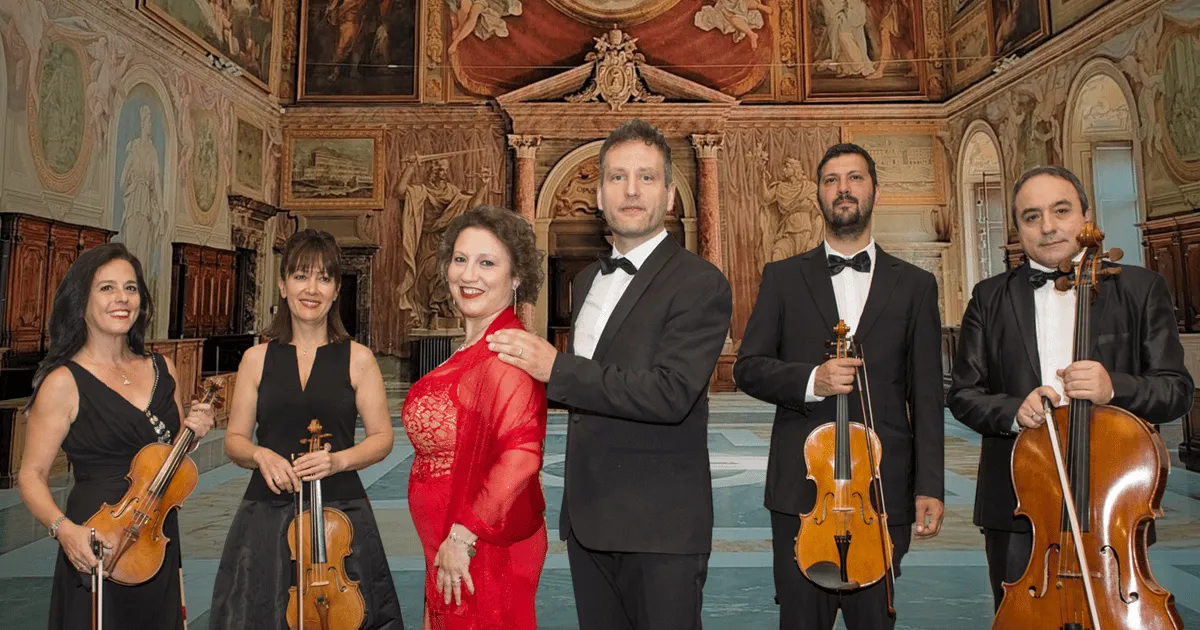 from $67
Top rated
Concert / show · evening
Rome: Opera Concert at Palazzo della Cancelleria
An hour of arias and duets in a Renaissance palace off Campo de' Fiori, entered through Bramante's courtyard.
Check Availability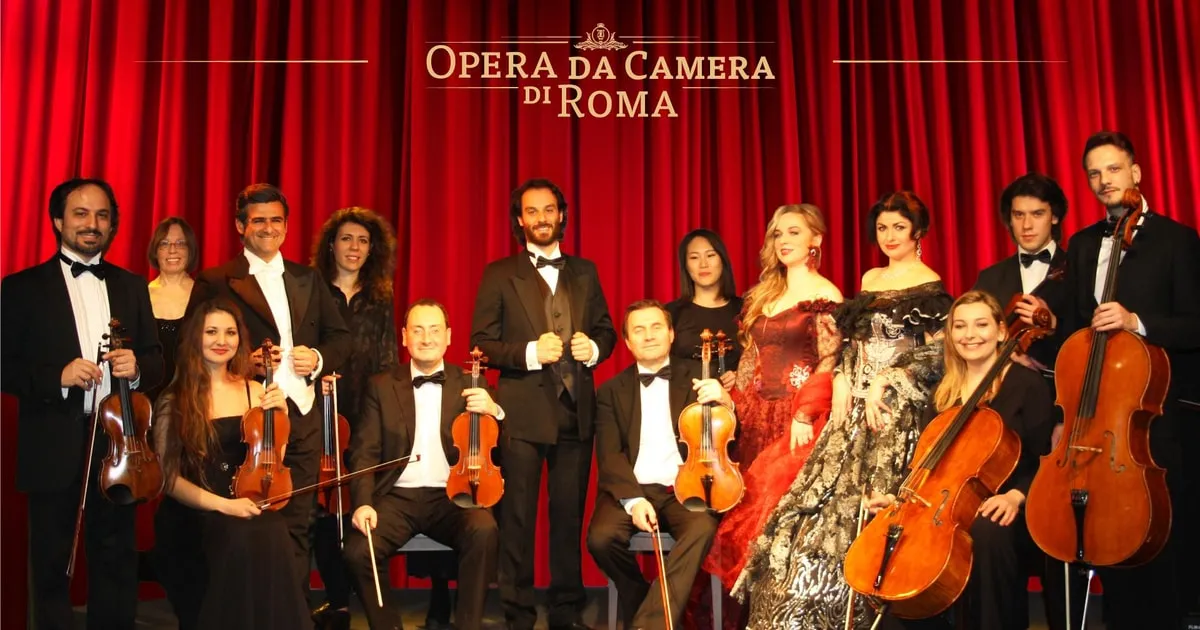 from $38
Most reviewed
Concert / show · evening
Rome: "The Most Beautiful Opera Arias" Concert
Opera da Camera di Roma: arias, Neapolitan songs and a little Vivaldi with tenor, soprano and grand piano, 50 minutes.
Check AvailabilityPrices, ratings and details are the platform's own. dollar figures are the listed prices — the platform bills in your account's currency.
Questions about your first opera night
What is the best opera to see in Rome?
Tosca is the natural choice, since it premiered at the Rome opera house in 1900 and is set in the city itself. La Traviata is the other safe first pick, and it plays in a concert staging at St Paul's Within the Walls as well as in theatres. Both are packed with familiar melodies.
What is the dress code for opera in Rome?
At the Teatro dell'Opera, evening dress is requested on opening nights and premieres only. Other nights have no written rule, with smart clothes normal in the stalls and smart casual in the gallery. Church and palace concerts list smart casual. Our opera dress code page has the full picture.
Can I take photos at the opera in Rome?
No. The theatre's rules ban photos and recording, and phones may not be used in the auditorium at all. Bags, umbrellas, hats and cameras go to the cloakroom before you sit down.
What happens if I arrive late to the opera in Rome?
Once the performance starts, nobody enters the stalls or the numbered gallery and balcony seats. Latecomers wait in the foyer until the interval, when they are shown to their seats. Some church concerts simply refuse late arrivals, so arrive early.
How long is an opera evening in Rome?
A three-act opera usually runs about two and a half hours with intervals. Church concerts are shorter, from 50 minutes to about 90 minutes, and the concert staging of La Traviata at St Paul's runs about two hours and ten minutes.
Do I need to understand Italian to enjoy the opera?
No. The theatre projects surtitles that translate the sung text above the stage. Reading a synopsis beforehand helps, and at arias concerts there is no story to follow at all.